Financial service provider (FSP)
Last reviewed: Sep 22, 2026
A financial service provider (FSP) is a regulated entity that provides and maintains payment accounts for its customers. Examples of FSPs include banks, digital wallet providers, and mobile money providers.
As regulated entities, FSPs are subject to the laws, rules, and regulations of their jurisdictions. As such, Rafiki should not be used in production environments by non-regulated entities.
All data stays with the FSP, minus optional telemetry data that’s aggregated and pushed to the Interledger Foundation (ILF). The data sent to the ILF Open Telemetry collector is protected via differential privacy, not stored locally. Rafiki holds no source-of-truth data, personal or otherwise.
Rafiki imposes no retention schedule on payment or liquidity records itself. That data resides on infrastructure the FSP deploys and administers. As such, retention limitation is a policy the FSP applies at its own database and infrastructure layer.
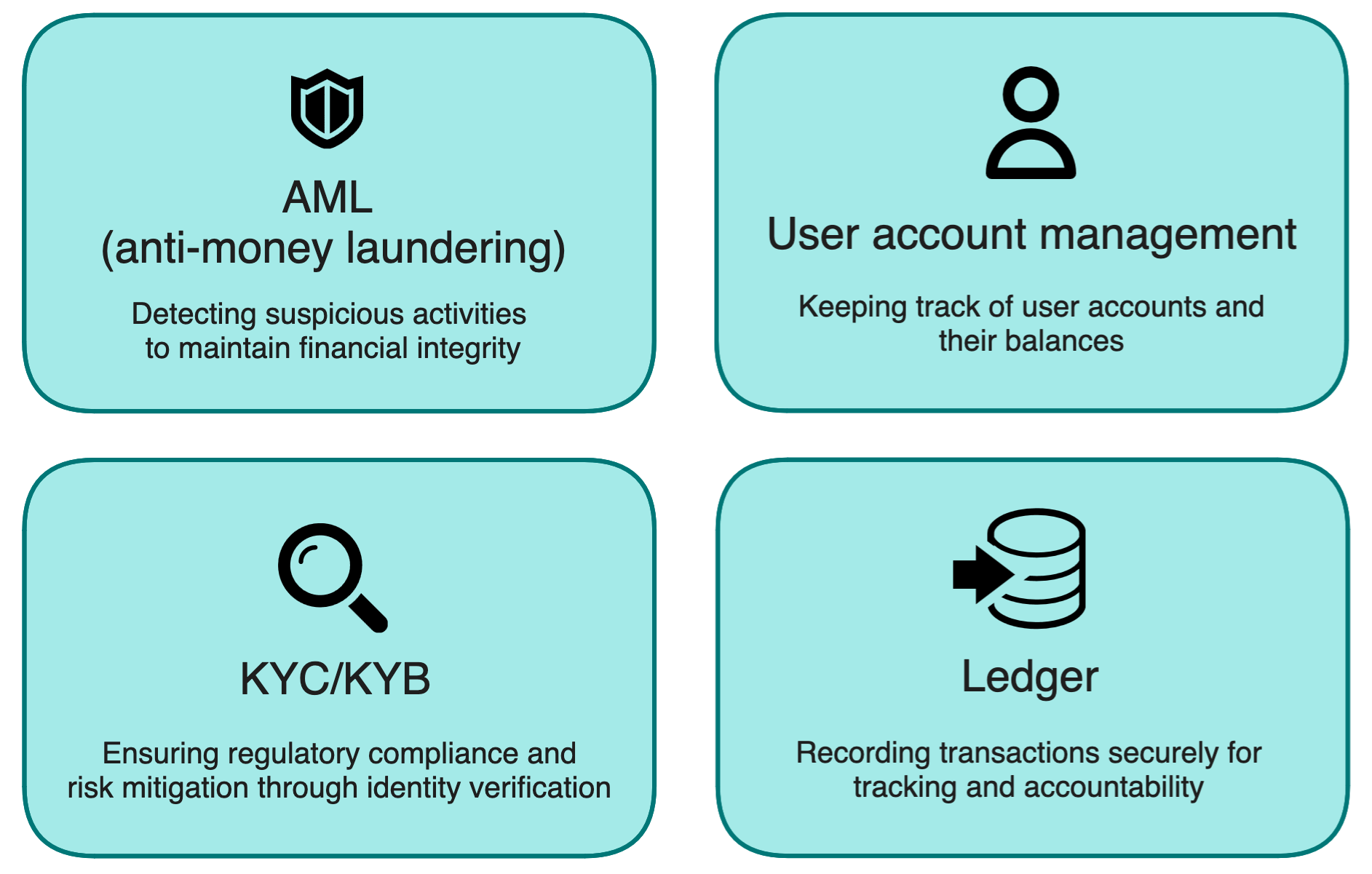
FSPs follow anti-money laundering laws and regulations to detect and prevent money laundering and other suspicious financial activities.
KYC and KYB practices ensure FSPs verify the identities of their customers by collecting IDs and proof of address, verifying business registrations, checking against sanctions lists, and other processes.
FSPs are responsible for:
- Managing the creation, storage, upkeep, and security of their customers’ accounts and balances therein.
- Authenticating their customers and providing secure channels for them to interact with their accounts via mobile apps, websites, or other interfaces.
- Storing and maintaining their own wallet address-to-customer account mapping. Rafiki hosts wallet addresses for account discoverability but doesn’t store any link between an address and a customer account.
As FSPs handle deposits and withdrawals through external payment methods (like bank transfers, credit cards, and other services) they must record all transactions and balance information in their ledger.